
Etsy is still the default place for UK makers and small sellers to start, but rising fees, algorithm changes and heavy competition mean many sellers are asking whether there is a better option. This guide compares the main Etsy alternatives in the UK, and covers something most comparison articles skip: what each choice means for your tax, bookkeeping and record keeping.
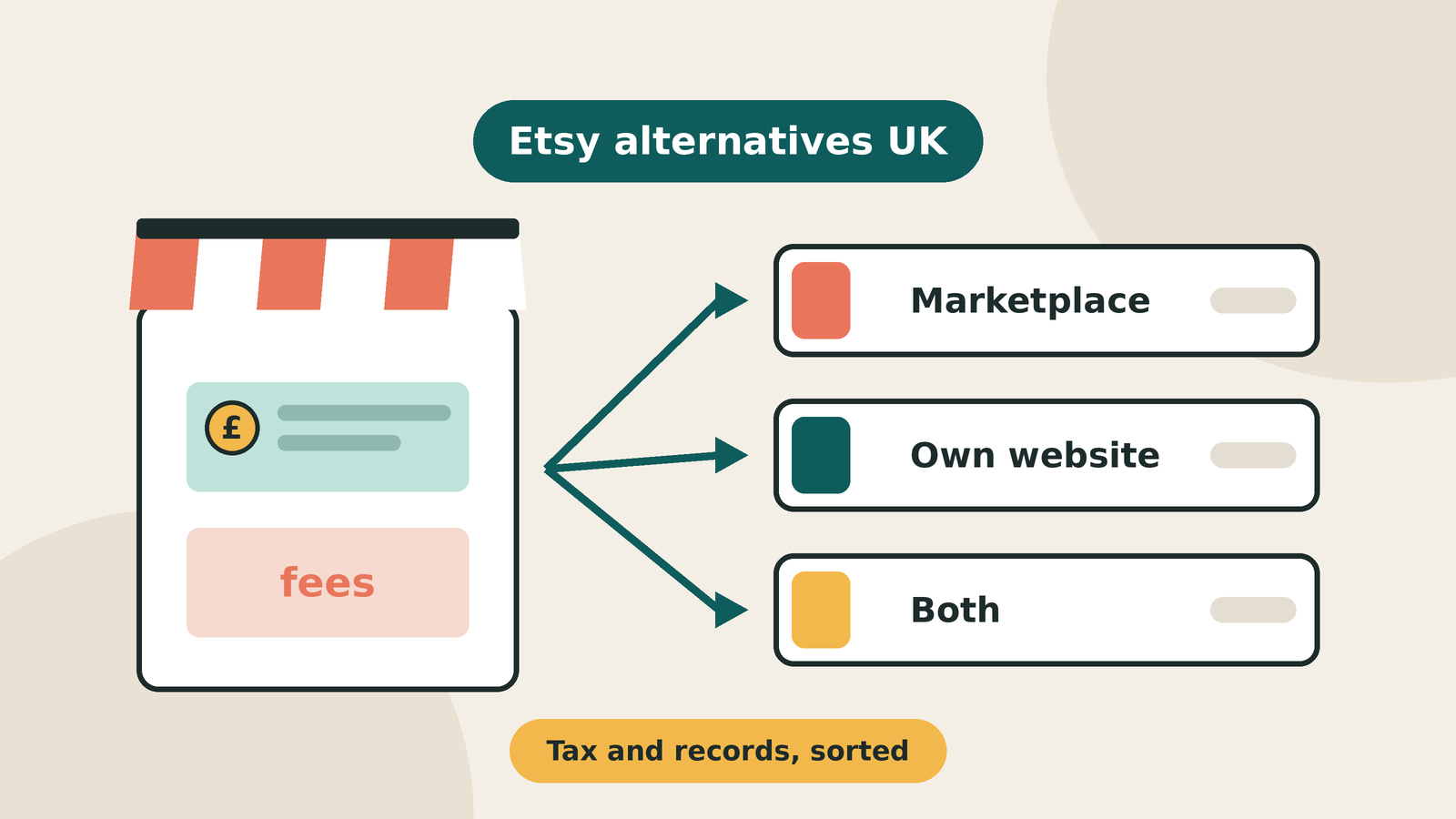
Short answer: there is no single best Etsy alternative. Marketplaces such as Amazon Handmade, Folksy and Not On The High Street give you ready-made traffic but take a cut and limit your control. Your own store on Shopify, WooCommerce or Squarespace gives you control of your brand and customer data, but you have to bring the customers yourself. Many UK sellers end up using one marketplace and their own website together.
Why UK sellers look for an Etsy alternative
The usual reasons are the same across most sellers we speak to:
- Fees stack up: listing fees, transaction fees, payment processing fees and optional advertising can take a large share of each sale.
- Visibility is out of your hands, because search results and ads are controlled by the platform.
- You do not own the customer relationship, so repeat sales and email marketing are hard.
- Competition from mass-produced and resold items makes it harder for genuine makers to stand out.
Before you move, add up your real total cost per sale on Etsy, including payment fees, ads and postage subsidies. That figure is what you are comparing every alternative against.
Top online marketplaces for UK sellers
Amazon Handmade
Amazon Handmade has no monthly listing fee, but you pay a referral fee on each sale and you must be approved as an artisan. You also compete with the wider Amazon catalogue. It suits sellers who can handle fulfilment and want access to a very large customer base.
Folksy
Folksy is a UK handmade marketplace with a loyal, community feel. It typically charges a subscription plus commission, and offers tools to help sellers move listings over from Etsy. Traffic is smaller than Etsy or Amazon, so it works best as an extra channel rather than a full replacement.
Not On The High Street
Not On The High Street is curated, so you apply to join and are charged a joining fee and commission on sales. It suits established small brands with strong product photography and a gift-led range.
Check current terms before you commit
Fees and approval rules on all of these platforms change often. Always check the platform's current fee page before you decide, and work out your margin on a real product.
Website builders for your own online store
Shopify
Shopify is built for ecommerce and is the easiest route to a professional store with built-in payments, inventory and shipping tools. You pay a monthly subscription plus payment processing fees, and you are responsible for your own marketing.
WordPress and WooCommerce
WooCommerce is flexible and the software itself is free, but you manage hosting, security, updates and plugins. It suits sellers who are comfortable with a more technical setup or have a developer to help.
Squarespace
Squarespace is a simple, design-led option, good for sellers with a small catalogue who want a polished site without much technical work. You still handle your own traffic and marketing.
How to choose the right Etsy alternative
- Your audience. If your customers already shop on a marketplace, stay close to it. If they follow you on social media or by email, your own store works well.
- Your brand. Your own website lets you control presentation, packaging inserts, and customer communication.
- Your budget. Compare monthly costs, commission and payment fees on a typical order, not just the headline price.
- Your time. A marketplace saves you marketing effort. Your own store saves you commission but costs you time.
- Your admin. More sales channels means more reports to reconcile. Pick a setup you can keep accurate.
The tax and bookkeeping side of selling online in the UK
Whichever platform you choose, the tax rules are the same, and HMRC can see more than many sellers realise.
Is it a hobby or a business? If you sell regularly with the aim of making a profit, HMRC is likely to treat it as trading. Occasional sales of your own unwanted items are different.
The trading allowance. Sole traders can usually earn up to £1,000 of gross trading income in a tax year without declaring it or paying tax on it. Above that, you need to register for Self Assessment, and you choose between deducting the allowance or claiming your actual expenses.
Platforms report to HMRC. Under the UK digital platform reporting rules, online marketplaces now send seller income information to HMRC. If you sell through Etsy, eBay, Amazon and similar sites, assume HMRC can see your sales.
VAT. You must register for VAT if your taxable turnover goes over the VAT registration threshold (currently £90,000 over a rolling 12 months). Turnover from all your channels counts together, so combine your marketplace and website sales.
Making Tax Digital for Income Tax. From April 2026, sole traders with qualifying income above £50,000 must keep digital records and send quarterly updates, with lower thresholds phased in after that. If you are growing, it is worth setting up digital bookkeeping now.
Sole trader or limited company? Many makers start as sole traders. A limited company can make sense as profits grow, but it adds accounts, filing deadlines and payroll or dividend rules. The right answer depends on your profit level, so get advice before you switch.
Keep records of everything. Platform fees, postage, packaging, materials, advertising and payment processor charges are all allowable expenses if they relate to your sales. Your platform statements show fees, but you still need a clean record of your costs and your payouts.
Making the switch from Etsy
- Keep your Etsy shop open while you test a second channel.
- Export your sales history and fee statements before you change anything, so your tax records stay complete.
- Move your best sellers first and measure results for a few months.
- Build an email list so you own the customer relationship wherever you sell.
- Set up your bookkeeping so payouts from each platform reconcile to your bank account.
Frequently asked questions
What is the best Etsy alternative in the UK?
It depends on your product and audience. Amazon Handmade offers reach, Folksy offers a handmade community, Not On The High Street suits curated gift brands, and Shopify gives you your own store and full control.
Do I have to pay tax on Etsy sales in the UK?
If your gross trading income from selling is over £1,000 in a tax year, you generally need to register for Self Assessment and report it. This applies on any platform, not only Etsy.
Do I need to register as self-employed to sell online?
If you are trading, meaning selling regularly to make a profit, yes. If your income is under the £1,000 trading allowance you usually do not need to report it.
Is it cheaper to sell on my own website than on Etsy?
Often, per sale, yes. But you pay for the platform subscription, payment fees and your own marketing, so compare total cost per order rather than fees alone.
Can I sell on more than one platform?
Yes, and many sellers do. Just make sure all your income is recorded together, particularly for the VAT threshold.
Need help with tax and bookkeeping for your online shop?
Duna Tax provides flat-fee, digital-first accounting and tax compliance for sole traders and small limited companies, including online sellers. Get in touch to talk through the best set-up for your business.